
On-Page SEO: The Complete Guide to Rankings, AEO & GEO
Writer : Bishojit Sarkar
SEO Specialist
You published 30 carefully optimized blog posts. For six months, traffic climbed. Rankings improved. A few pages reached the first page of Google. Then everything flatlined.
You changed nothing. Your competitors didn’t suddenly publish hundreds of articles. Your keyword research was still solid. So what happened?
The problem is that on-page SEO has moved beyond inserting keywords, writing a title tag, and adding a meta description. Search engines increasingly evaluate whether a page clearly explains a topic, satisfies the searcher’s intent, connects related entities, demonstrates trust, and provides information that machines can understand and extract.
That is why on-page SEO in 2026 is no longer just about ranking a URL in Google’s traditional results. Your content may also need to become a useful source for Google AI Overviews, ChatGPT, Gemini, Perplexity, Claude, and Bing’s AI experiences.
This complete guide gives you the updated picture.
You will learn:
- How page-level optimization works in modern Google Search.
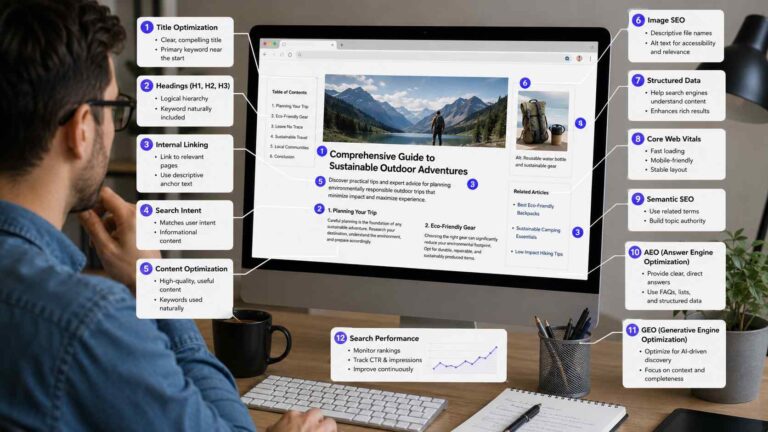
- The 12 core factors that influence page quality and visibility.
- How semantic SEO, entities, and topical authority change keyword optimization.
- How to structure content for AEO (Answer Engine Optimization) and GEO (Generative Engine Optimization).
- Which free and paid tools can identify problems quickly.
- How to audit existing pages and recover lost opportunities.
- How to apply the entire process through a practical 12-step checklist.
Here’s the thing: you don’t need to rebuild your entire website overnight. You need to understand what changed, identify the highest-value weaknesses, and improve the pages that already have potential.
Table of Contents
- What Is On-Page SEO?
- On-Page vs Off-Page vs Technical SEO
- Why It Matters More in 2026
- Factor 1: Title Tag Optimization
- Factor 2: Meta Description Optimization
- Factor 3: Header Tags
- Factor 4: Keyword Placement and Semantic SEO
- Factor 5: Content Quality, Depth and E-E-A-T
- Factor 6: URL Structure
- Factor 7: Image SEO and Alt Text
- Factor 8: Internal Linking
- Factor 9: Page Speed and Core Web Vitals
- Factor 10: Schema Markup
- Factor 11: Semantic SEO and Entity Optimization
- Factor 12: AEO and GEO Optimization
- Complete Audit Checklist
- Real Examples
- SEO Tools
- 12-Step Checklist
- FAQ
- Conclusion
What is on-page SEO?
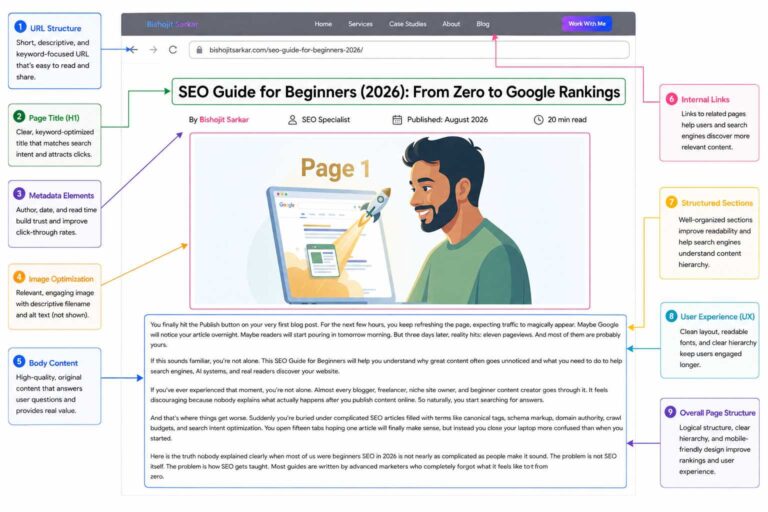
On-page SEO is the practice of optimizing an individual webpage’s content and structure for users and search engines. It includes keyword targeting, search intent, headings, titles, content quality, internal links, images, URLs, structured data, and page experience.
Think of a webpage as a candidate walking into a job interview. The content is the candidate’s answer. The title and headings introduce the subject. Internal links provide references. Structured data helps machines interpret the information. A confusing page gives Google more work to do.
The phrase “on-page SEO meaning” therefore goes much further than “put the keyword in the article.” The full form is commonly understood as search engine optimization performed on the page itself. In digital marketing, it is the page-level work that helps search engines connect a document with a query and a user’s underlying need.
What This Means For You: When you optimize a page, ask whether a person and a search engine can immediately understand what the page is about, who it helps, and what evidence supports it.
What are the 4 types of SEO?
On-Page SEO: This focuses on the content and elements you control on individual pages. Titles, headings, content, internal links, images, URLs, and structured data belong here.
Off-Page SEO: This focuses on signals generated outside your own website. Backlinks, brand mentions, digital PR, and reputation are common examples.
Technical SEO: This improves the way search engines crawl, render, index, and access your website. Site architecture, canonicalization, XML sitemaps, redirects, and performance are common areas.
Local SEO: This helps businesses appear for searches connected with a geographic location. Business information, local relevance, reviews, and location-specific pages all contribute.
What are the 4 pillars of SEO?
A useful beginner framework is Content, Technical, Authority, and Experience. Content answers the searcher’s question, technical SEO makes the site accessible, authority provides external credibility, and experience determines how easily people can consume and use the page.
The four pillars overlap. A brilliant article cannot compensate for a page that search engines cannot access. Likewise, a technically perfect website cannot compensate for thin content that fails to answer the query.
What This Means For You: Think of SEO as a system rather than four isolated jobs.
In Simple Terms:
Your page needs the right information, the right structure, credible signals, and a good experience.
GEO Definition:
For generative search, page-level optimization means organizing information so AI systems can accurately identify the subject, relationships, answers, evidence, and entities contained within a document.
GEO Summary Snippet:
On-page SEO improves the elements of a webpage that communicate relevance, meaning, quality, and usability. In modern search, those same elements can help AI systems understand and cite individual passages.
Bottom Line:
The best page-level optimization makes a webpage easy for both humans and machines to understand.
On-Page vs Off-Page vs Technical SEO — Clear Differences Explained
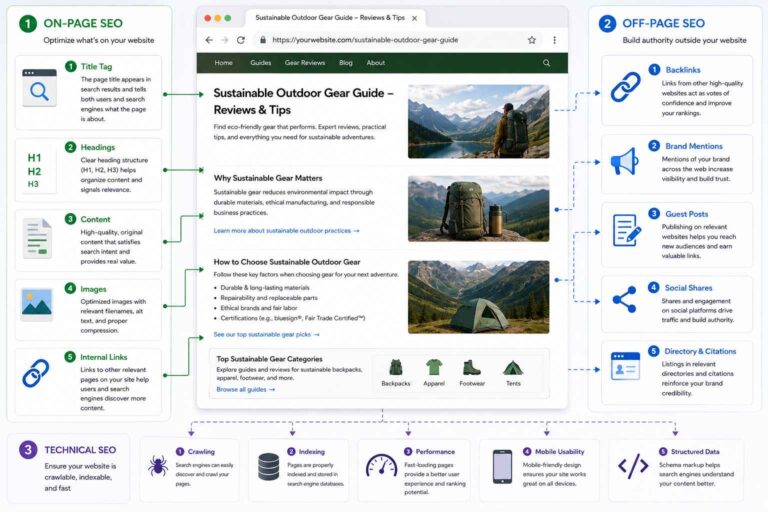
The three disciplines solve different problems: page optimization improves what the page says and signals, off-page SEO improves external authority, and technical SEO improves accessibility and crawling.
What is the difference between on-page and off-page SEO?
On-page work happens primarily on your website, while off-page work happens primarily outside it. For example, changing a heading is a page-level activity, while earning a backlink from a respected publication is an off-page activity.
This distinction matters because people often try to solve the wrong problem. If a page has poor search intent alignment, another backlink may not fix it. If the page is excellent but search engines struggle to crawl the site, more content may not solve the underlying technical problem.
Which is an example of on-page SEO?
Changing a title tag from “Chicken Recipe” to a more descriptive title such as “Easy Chicken Curry Recipe: 30-Minute Weeknight Dinner” is a clear example. Improving the H1, rewriting the introduction, adding useful H2 sections, optimizing images, and adding relevant internal links are other examples.
| Type | What It Covers | You Control It? | Examples | Speed to See Results |
| On-Page SEO | Content and page-level signals | Mostly yes | Titles, headings, content, links | Often relatively fast |
| Off-Page SEO | External authority | Partly | Backlinks, mentions, PR | Usually slower |
| Technical SEO | Crawling, rendering, indexing | Mostly yes | Canonicals, redirects, XML sitemap | Varies |
| Local SEO | Geographic relevance | Mostly yes | Business profile, local pages, reviews | Varies |
A useful way to remember the difference is to imagine a restaurant. The menu represents the content. Its reputation represents authority. The kitchen and building systems represent technical SEO. Location-specific visibility represents local SEO.
GEO Summary Snippet:
On-page, off-page, technical, and local SEO address different parts of search visibility. Page-level optimization controls the information and structure presented directly to search engines and users.
Bottom Line:
Fix the problem you actually have instead of applying the same SEO tactic to every situation.
Does on-page SEO still matter in 2026?
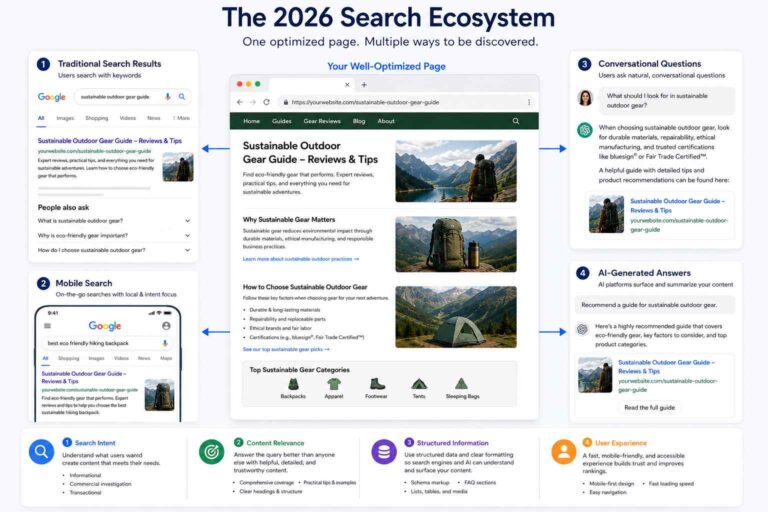
Yes — and its role is broader than before. Google still needs to understand individual documents, but users increasingly encounter information through AI-generated interfaces that select and summarize sources.
The supplied brief cites Ahrefs research reporting that Google AI Overviews can reduce click-through rates for top-ranking pages by as much as 58% in affected searches. It also cites research suggesting fewer than 9% of ChatGPT citations come from Google’s traditional top ten, reinforcing a crucial point: ranking well in Google does not automatically guarantee visibility in generative answers.
That creates three simultaneous objectives. Traditional SEO asks, “Can this page rank?” AEO asks, “Can this page provide a clear answer?” GEO asks, “Can this page become a useful source for a generated response?”
What This Means For You: A page can rank highly and still lose visibility if its competitors provide cleaner answers, stronger entities, better evidence, or more extractable passages.
I have seen this pattern repeatedly in audits: a page contains excellent information, but the information is buried beneath a long introduction, vague headings, and paragraphs that never answer the obvious question directly. The content may be good, yet the presentation creates unnecessary friction.
In Simple Terms:
You are no longer optimizing only for a ranking position; you are optimizing for inclusion wherever the answer appears.
GEO Summary Snippet:
Modern search optimization must account for traditional rankings and AI-mediated discovery. Clear answers, strong topical relevance, useful structure, and credible evidence increase the chances that a page can contribute to multiple search experiences.
Bottom Line:
In 2026, visibility means being understandable enough to rank and useful enough to be selected.
Factor 1: Title Tag Optimization
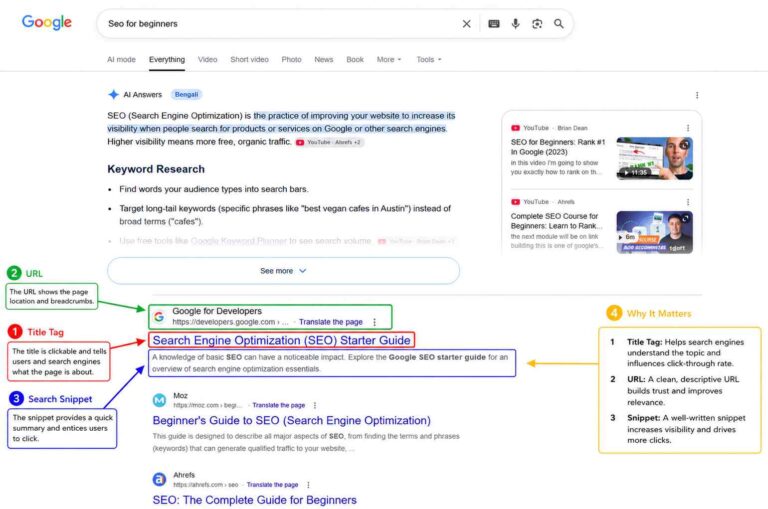
A title tag tells search engines and searchers what a webpage is about and often becomes the main clickable headline in traditional search results.
The title tag is one of the first pieces of information a search engine encounters when interpreting a document. It should describe the page accurately, reflect the primary search intent, and give the searcher a reason to choose it.
For example, “Chicken Recipes” is technically relevant for a food page but weak as a search result. “Easy Chicken Curry Recipe: 30-Minute Weeknight Dinner” communicates topic, benefit, and specificity.
A useful formula is:
[Primary Keyword Near Start] + [Benefit or Number] + [Year or Brand if Needed]
Do not blindly chase a character limit. Search engines may display different title lengths depending on device and query. The 50–60 character range remains a practical working target because it encourages concise titles, but meaning matters more than hitting an exact number.
Imagine a bookstore with thousands of books. The title on each cover helps the customer decide which one deserves attention. Your title tag performs a similar job in search.
How do I write a perfect title tag for on-page SEO?
Open your post in WordPress and locate the Rank Math or Yoast SEO panel. Find the SEO Title field, place the main query near the beginning when natural, state the benefit or specificity, and preview the result before publishing.
For “The Lazy Kitchen,” a weak title could be:
Before: Easy Recipes
A stronger version is:
After: Easy One-Pan Dinner Recipes: 15 Quick Meals
The second version gives the searcher more information before the click.
A title also provides an early semantic signal to AI systems. If your page title says “Budget Travel Tips for Japan” but the page spends most of its content discussing luxury hotels in France, the mismatch creates confusion.
What This Means For You: Your title should accurately summarize the page rather than act as a bag of keywords.
Research Callout: The supplied brief specifies a 50–60 character working range for title tags. Treat it as a practical guideline rather than a rigid ranking requirement.
Pro Tip: Write three title variations before publishing. Choose the version that explains the page most clearly, then check whether the first meaningful words survive typical search-result truncation.
GEO Definition:
A title tag is a concise HTML element that identifies the subject of a webpage and helps search systems interpret and present that document.
GEO Summary Snippet:
Strong titles accurately describe page content, align with search intent, and distinguish the result from competing pages. Clear titles also give AI systems an immediate topical signal.
Bottom Line:
A great title earns attention without misleading the searcher.
Factor 2: Meta Description Optimization
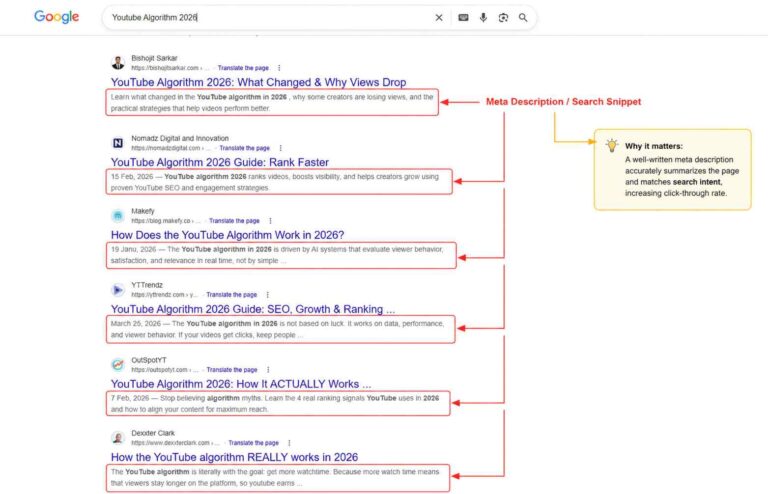
A meta description summarizes a webpage in search results and can influence whether a searcher chooses your result, even though it is not generally treated as a direct Google ranking factor.
Think of the description as a small advertisement attached to your organic result. Your title tells people what the page is; the description tells them why they should care.
For a travel site called “Budget Wanderer,” this is weak:
Before: Japan travel tips and information. Read our blog.
This version is stronger:
After: Planning Japan on a budget? Get practical Tokyo, Kyoto, transport, food, and accommodation tips from Budget Wanderer.
The second description matches an identifiable need and previews the content.
Does meta description directly affect Google rankings?
No. Google does not generally use the meta description as a direct ranking signal. However, a useful description can improve click-through behavior when Google chooses to display it, making it an important part of search-result optimization.
A practical template is:
[Hook or Question] + [What They Get] + [Relevant Topic] + [Optional CTA]
Do not force every keyword into the description. Write naturally and accurately.
A good description also helps AI systems understand the page at a glance, but you should not treat it as a magic GEO field. The actual content still needs to support the promise.
What This Means For You: Think of the description as persuasive search-result copy, not a ranking hack.
Research Callout: Meta descriptions are commonly used as search-result snippets when Google decides they provide a useful summary, but Google may generate a different snippet from the page content.
Pro Tip : After publishing, compare pages with strong impressions but weak clicks in Google Search Console. If the page satisfies the query but attracts few clicks, test a clearer title and description.
GEO Definition:
A meta description is an HTML summary that gives search engines and users a concise description of a webpage’s subject and value.
GEO Summary Snippet:
Meta descriptions primarily influence search-result presentation and user click behavior rather than acting as direct ranking factors. Their strongest value comes from accurately communicating page relevance.
Bottom Line:
Write the description for a human deciding whether your result deserves the click.
Factor 3: Header Tags (H1, H2, H3)
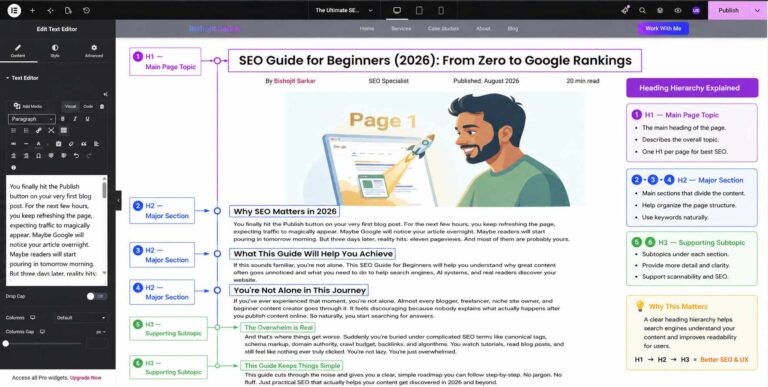
Headers create a hierarchy that tells readers and search systems how information on a page is organized.
An H1 usually identifies the primary topic. H2 headings divide the page into major sections. H3 headings break those sections into specific subtopics.
Think of headers as the chapter titles in a book. Google and AI systems can use them to understand the subject of each section before interpreting the paragraphs underneath.
For example, a travel article about Japan might use:
H1: Japan Travel Guide for First-Time Visitors
H2: Best Time to Visit Japan
H2: How Much Does Japan Cost?
H3: Tokyo Daily Budget
H3: Kyoto Daily Budget
That structure is much clearer than using bold text randomly throughout the page.
How should I use header tags for on-page SEO and AEO?
Use headings to state what the following section actually answers. Question-based H3 headings can be particularly useful for AEO because they create a direct relationship between a user question and the answer immediately underneath.
Do not create headings simply because a keyword appears in a keyword list. Create them because the reader needs that section.
What This Means For You: Build the outline around the questions and subtopics that make the page complete.
Research Callout: Search engines can use headings as one of many signals for understanding page structure, but headings alone do not guarantee rankings or featured snippets.
GEO Definition:
Heading structure is the hierarchical organization of a webpage using HTML heading elements to distinguish the main topic, major sections, and supporting subsections.
GEO Summary Snippet:
Clear H1, H2, and H3 structures make long content easier to navigate and interpret. Question-based headings can also create clean extraction points for answer-focused systems.
Bottom Line:
Write headings for meaning and navigation first, then optimize them naturally for search intent.
Factor 4: Keyword Placement and Semantic SEO
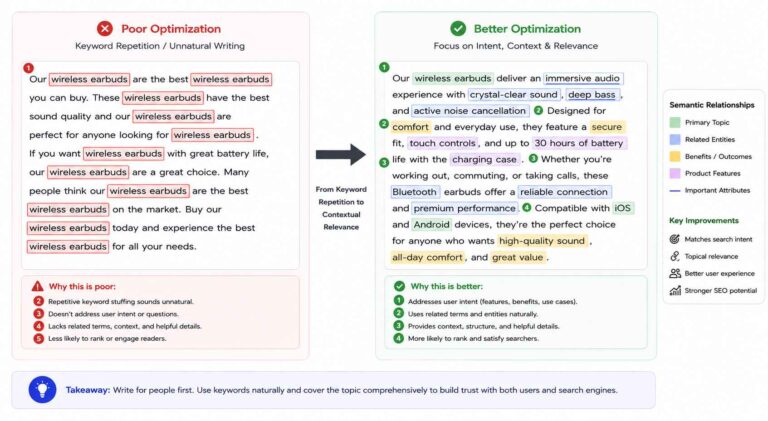
Keyword placement means using important search terms where they naturally clarify the subject, while semantic SEO expands the page around related concepts, entities, questions, and relationships.
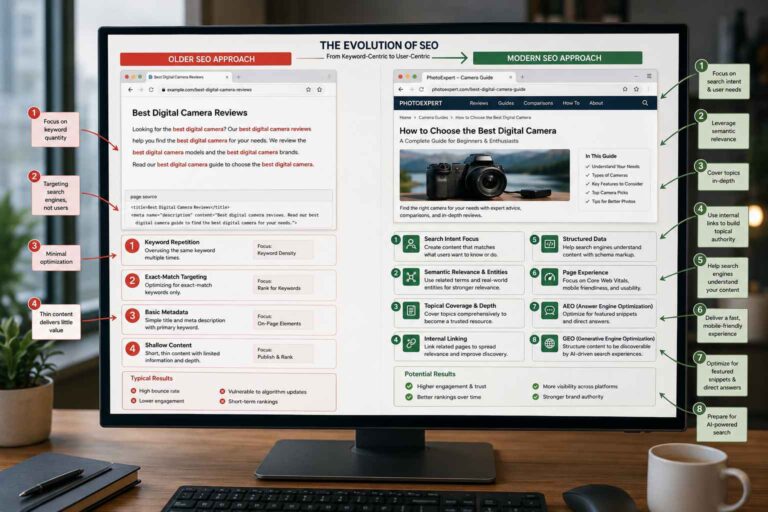
The old approach was simple: choose a keyword, repeat it several times, and hope the page wins. Modern systems can understand language relationships far better than that.
Suppose you are writing about sourdough bread. A semantically complete page may naturally discuss starter hydration, fermentation, flour, proofing, gluten development, oven temperature, dough strength, and feeding schedules.
None of those terms needs to replace the main topic. Together, they demonstrate topical coverage.
How many keywords should be used on a page?
There is no universal keyword count that guarantees a ranking. Use the primary query where it naturally identifies the topic, then cover related concepts based on search intent and the information users need.
Keyword clustering means grouping related queries around one primary topic instead of creating a separate page for every minor variation. This reduces unnecessary duplication and can help build a stronger topical map.
Keyword cannibalization happens when multiple pages on the same website compete for substantially the same intent. For example, publishing five pages targeting nearly identical “best running shoes” queries can create unnecessary internal competition.
What is semantic on-page SEO?
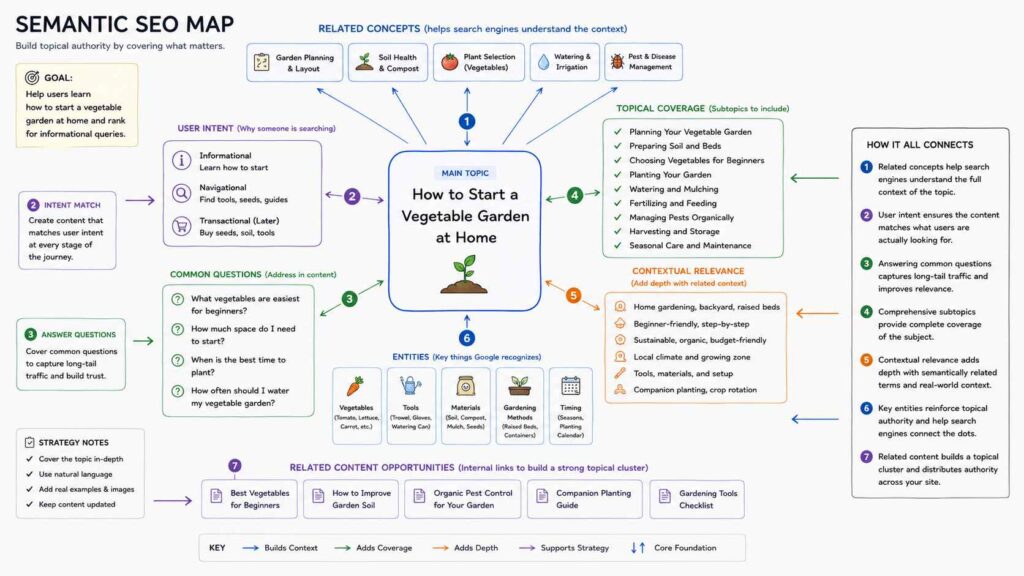
Semantic SEO means optimizing for meaning and relationships rather than relying on exact keyword repetition. It connects concepts, entities, attributes, questions, and supporting information so search engines can understand the subject more completely.
The supplied brief describes a major 2026 shift from keyword density toward topic authority and breadth of coverage. That framing is useful, but keyword usage itself has not become irrelevant. The practical lesson is to stop treating repetition as the objective.
What This Means For You: Ask, “What information must this page contain to fully satisfy this search intent?” before asking, “How many times should I use the keyword?”
Research Callout: The supplied brief references Agnikii research for the shift toward topical depth and breadth rather than simple keyword density. Validate the specific wording and study date before publication.
Pro Tip : Export the top-ranking pages for your target query, group their recurring concepts into clusters, and compare those clusters with your own outline. Add missing concepts only when they genuinely help satisfy the intent.
GEO Definition:
Semantic SEO organizes content around concepts and relationships so search systems can interpret topical meaning beyond exact keyword matches.
GEO Summary Snippet:
Semantic optimization uses related concepts, entities, and context to demonstrate topical relevance. Strong semantic coverage can make content useful for varied queries without creating separate pages for every keyword variation.
Bottom Line:
Build topical completeness, not keyword density.
Factor 5: Content Quality, Depth and E-E-A-T — What Google Rewards in 2026
High-quality content satisfies the intended query, provides useful evidence, demonstrates appropriate expertise, and gives readers a reason to trust the information.
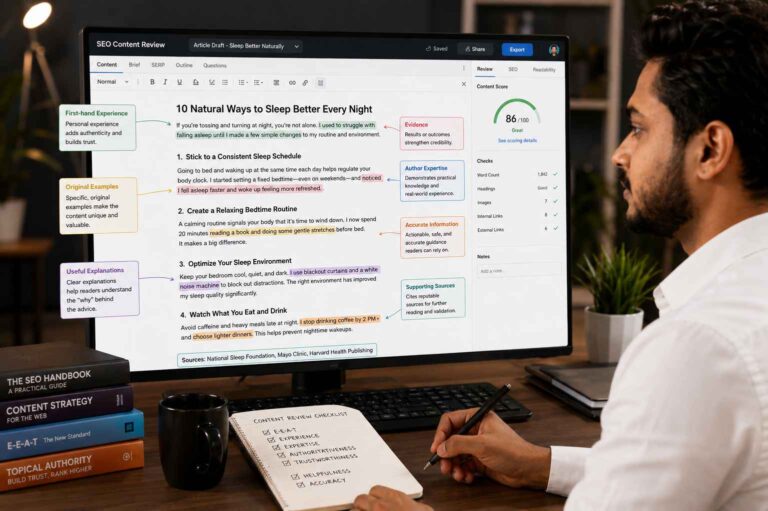
E-E-A-T stands for Experience, Expertise, Authoritativeness, and Trustworthiness. It is a framework Google discusses when evaluating the quality of content, especially where credibility matters.
Experience refers to firsthand knowledge. Expertise refers to demonstrated subject knowledge. Authoritativeness concerns recognition and credibility. Trustworthiness covers accuracy, transparency, and reliability.
A food blogger can demonstrate experience by explaining how a recipe behaved in a real kitchen. A financial site needs stronger evidence and careful sourcing. A travel writer can add firsthand observations rather than repeating generic hotel descriptions.
How do I optimize content for SEO?
Start with search intent. Determine whether the user wants an explanation, comparison, transaction, local recommendation, tutorial, or another outcome.
Then make the page complete enough to satisfy that intent. Content length should follow the task rather than an arbitrary word-count target.
For example, a simple definition may need 500 words. A complete ecommerce buying guide may need several thousand. A product page may perform better with concise specifications, benefits, FAQs, comparisons, and clear purchase information rather than a giant essay.
Passage-level evaluation also matters. Search systems can assess individual sections of a document rather than treating the entire page as equally valuable.
What This Means For You: A 3,000-word article is not automatically better than a 1,000-word article. Every section needs a reason to exist.
Research Callout: The supplied brief references B2B SEO research regarding passage-level evaluation. Treat this as support for section-level usefulness, not proof that Google ranks pages using one publicly confirmed passage-scoring formula.
GEO Definition:
E-E-A-T describes qualities that help readers and search systems assess whether content demonstrates experience, expertise, authority, and trustworthiness.
GEO Summary Snippet:
High-quality pages align with search intent, provide sufficient topical coverage, and demonstrate appropriate credibility. Evidence, firsthand experience, transparent authorship, and accurate sourcing strengthen trust.
Bottom Line:
Depth matters only when it creates useful understanding.
On-Page SEO in 2024 vs On-Page SEO in 2026 — What Actually Changed
| Factor | Old Standard (2024) | New Standard (2026) | Priority Level |
| Keyword density | Repeat the target phrase naturally | Focus on meaning and topic coverage | High |
| E-E-A-T signals | Add author and sources | Demonstrate real experience and trust | High |
| Title tags | Include the main keyword | Match intent and communicate value | High |
| Schema markup | Add eligible structured data | Use structured meaning where appropriate | Medium-High |
| Content depth | Write longer articles | Cover the task completely | High |
| AEO optimization | Featured snippets | Direct, extractable answers | High |
| GEO/Semantic signals | Related keywords | Entities, relationships, context | High |
| Mobile-first | Responsive design | Fast, usable mobile experience | High |
| Image optimization | Add alt text | Alt text, format, size, context | Medium |
| Internal linking | Add several links | Build meaningful topical relationships | High |
| Entity optimization | Mention important terms | Explain entities and their relationships | High |
| AI visibility | Optional experiment | Core visibility consideration | High |
Factor 6: URL Structure
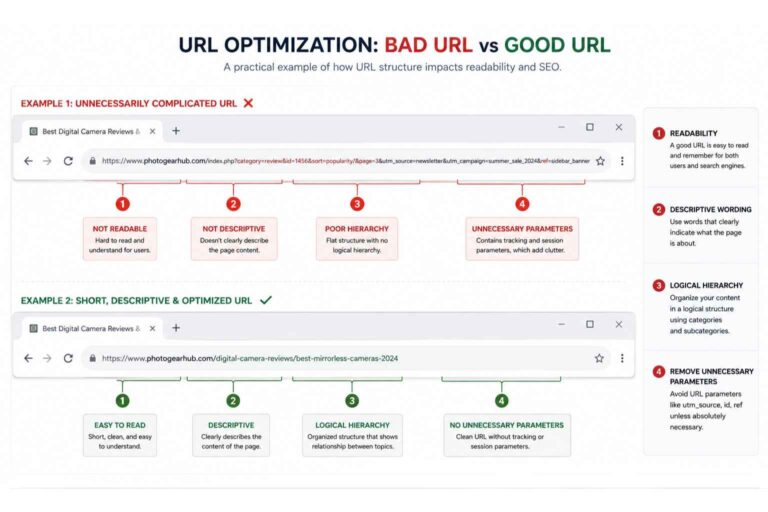
Hyphens are generally preferable to underscores for separating words because they make URLs easier to read.
Canonical tags solve a different problem. A canonical tag tells search engines which URL you consider the preferred version when substantially similar or duplicate URLs exist.
Imagine a library where the same book has been catalogued under four shelf numbers. A canonical signal helps identify the main record.
What makes a good SEO-friendly URL?
Use a short path that describes the page, avoid unnecessary parameters where possible, separate words with hyphens, and keep the structure consistent across the website.
For an ecommerce store called GearUp Store:
Before: /products/item-98273?category=42
After: /running-shoes/mens-trail-running-shoes/
The second URL communicates both category and subject.
What This Means For You: Build URLs that remain understandable even when someone sees them outside the webpage.
Research Callout: Search engines can use URL words as contextual information, but a keyword in a URL does not compensate for poor content.
GEO Definition:
URL optimization creates concise, descriptive addresses that provide contextual information about a webpage and support clean site architecture.
GEO Summary Snippet:
Search-friendly URLs are readable, stable, and descriptive. They support users and crawlers by making page relationships and topics easier to interpret.
Bottom Line:
Keep URLs simple enough that a human can understand them instantly.
Factor 7: Image SEO and Alt Text Optimization
Image SEO improves the way search engines and users understand, access, and load visual content.
Images contribute to page experience, accessibility, image search visibility, and contextual understanding. An image file named IMG_8493.jpg communicates almost nothing, while chicken-curry-cast-iron-pan.jpg provides useful context.
Alt text serves a different purpose. It describes an image for people who cannot see it and for situations where the image cannot load.
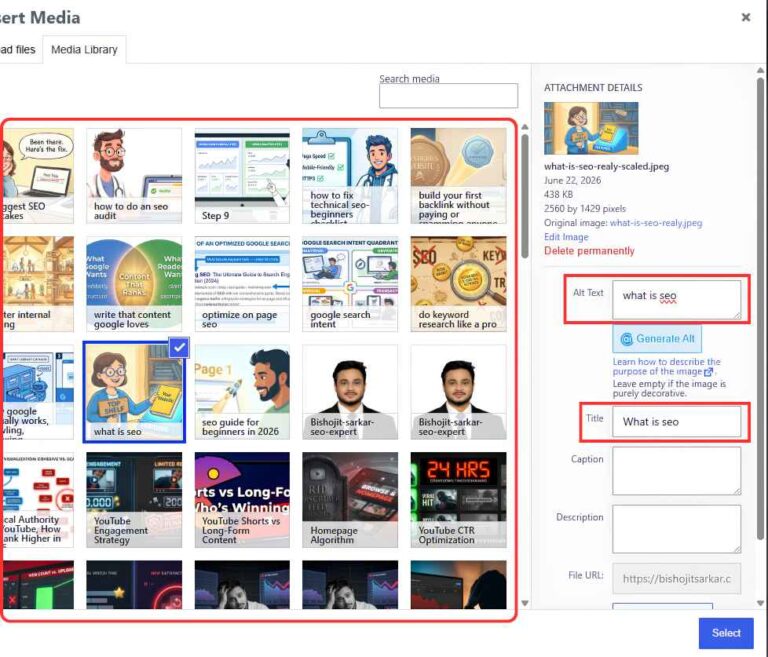
How does image alt text help with on-page SEO?
Useful alt text describes the meaningful content or function of an image without stuffing keywords. For example, “Bowl of chicken curry served with basmati rice” is useful for a recipe image.
Do not write “best chicken curry recipe chicken curry easy chicken curry recipe” as alt text. That is not accessibility; it is keyword stuffing.
Image formats also matter. WebP and other modern formats can reduce file size while maintaining useful quality. Tools such as TinyPNG, Squoosh, ShortPixel, and Google PageSpeed Insights can help identify oversized images.
Unoptimized images are among the easiest ways to create unnecessary page weight. Large hero images are particularly important because they can affect loading performance.
What This Means For You: Optimize the image file, its dimensions, its filename, its alt text, and its placement.
Research Callout: Image compression can substantially reduce file size, although the exact performance gain depends on the original image, dimensions, format, and compression settings.
Pro Tip : Resize an image to the largest dimensions your page actually displays before uploading it. Do not upload a 4,000-pixel photograph when the content area displays it at 900 pixels.
In Simple Terms: Make images meaningful, accessible, and light enough to load quickly.
GEO Definition:
Image optimization combines descriptive metadata, accessible alt text, appropriate formats, useful filenames, and efficient file sizes to improve image understanding and page performance.
GEO Summary Snippet:
Well-optimized images help users, accessibility tools, search engines, and image-search systems understand visual content. Compression and correct dimensions also reduce unnecessary page weight.
Bottom Line:
Treat every important image as part of the page’s information architecture, not decoration.
Factor 8: Internal Linking Strategy (Building Topical Authority)
Internal links connect pages within your own website and help users and crawlers discover related information.
Imagine a city. Internal links are the roads connecting neighborhoods. A strong road network makes it easy to move from one important destination to another.
For SEO, internal linking can clarify relationships between pages, distribute internal authority, and reinforce topical clusters.
Suppose a food website has a pillar page about healthy dinner recipes. Supporting pages cover high-protein meals, vegetarian dinners, meal prep, low-sodium recipes, and quick weeknight meals.
Links between those pages create a logical topical network.
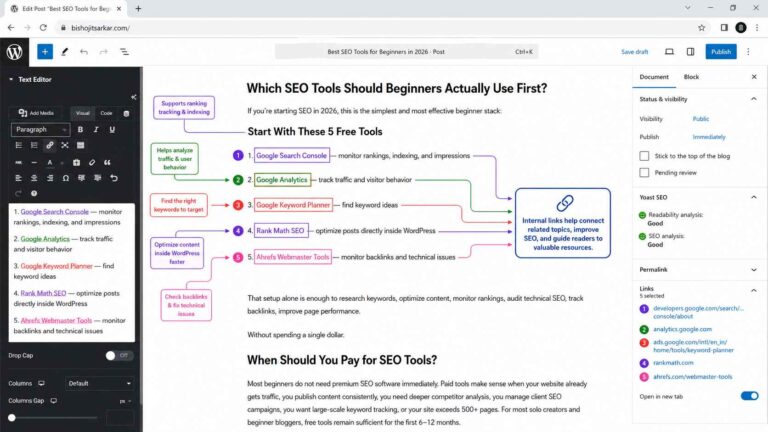
Internal links help search engines discover pages and understand how content relates across a site. They also help readers move naturally from one question to the next.
Anchor text should describe the destination. “Click here” tells the user almost nothing. “Beginner keyword research guide” communicates the subject of the linked page.
What This Means For You: Internal links should exist because the reader may genuinely need the next piece of information.
Research Callout: Google has long documented that links help discovery and understanding, but there is no universal number of internal links that guarantees better rankings.
Pro Tip : After publishing a new article, find three older pages that naturally mention its subject and add contextual links pointing to the new page. Then add links from the new page back to your strongest related resources.
GEO Definition:
Internal linking is the practice of connecting pages within the same website using contextual links that help users and search systems understand relationships between topics.
GEO Summary Snippet:
A strong internal linking structure connects related content and helps search engines discover and interpret pages. Contextual anchor text can reinforce the relationship between the source and destination topics.
Bottom Line:
Build internal links like useful roads, not decorative bridges.
Factor 9: Page Speed and Core Web Vitals
Page experience affects how easily people can access and interact with your content, especially on mobile devices and slower connections.
Core Web Vitals are Google’s user-focused performance metrics. LCP (Largest Contentful Paint) measures how quickly the main visible content loads. INP (Interaction to Next Paint) measures responsiveness to user interactions. CLS (Cumulative Layout Shift) measures unexpected movement of content while a page loads.
A slow page is like a restaurant where the menu looks excellent but the waiter takes ten minutes to bring it. The information may be good, but the experience creates friction.
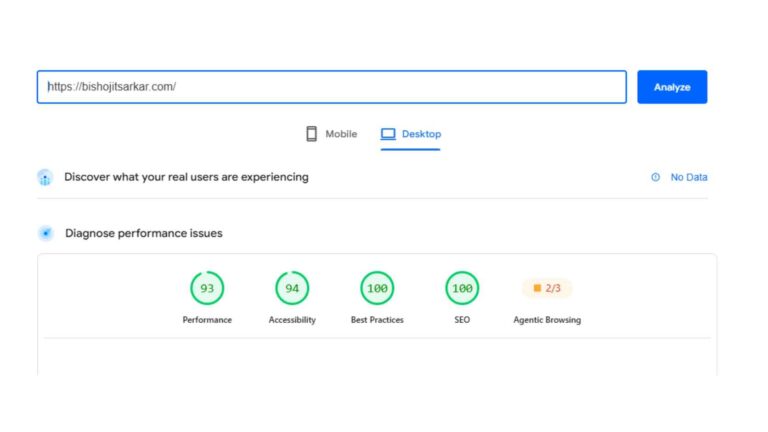
How does page speed affect on-page SEO rankings?
Performance is one part of Google’s broader page experience considerations, but it should not be treated as a single ranking switch. A fast page still needs useful content and strong relevance.
Mobile-first indexing makes mobile performance particularly important for markets where many users browse primarily through smartphones, including Bangladesh and other South Asian markets.
Check performance using Google PageSpeed Insights, GTmetrix, and Google Search Console. WordPress users can also evaluate caching options such as WP Rocket, W3 Total Cache, or LiteSpeed Cache.
Start with the biggest problems: oversized images, unnecessary JavaScript, slow hosting, render-blocking resources, and excessive third-party scripts.
What This Means For You: Don’t chase a perfect laboratory score while ignoring real usability. Make the page fast enough that users can read, tap, scroll, and interact without frustration.
Research Callout: The supplied brief cites a commonly repeated statistic that a one-second delay can reduce conversions by 7%. Treat that figure as a historical benchmark rather than a universal result for every website.
Pro Tip : Open PageSpeed Insights on your five highest-value landing pages. Fix the largest recurring issue across those pages first instead of making dozens of tiny changes.
GEO Definition:
Core Web Vitals are user-centered performance metrics that measure loading, responsiveness, and visual stability.
GEO Summary Snippet:
Page performance contributes to user experience and is especially important on mobile devices. LCP, INP, and CLS provide standardized ways to evaluate major aspects of page experience.
Bottom Line:
A great page should not make users wait to access great information.
Factor 10: Schema Markup and Structured Data (AEO and GEO Bridge)
Schema markup is structured information added to a webpage to help search engines interpret what the content represents.
JSON-LD is a common format for implementing structured data. Schema.org provides the vocabulary used to describe entities and content types such as articles, products, organizations, events, breadcrumbs, FAQs, and more.
Imagine handing a librarian a book and saying, “This is a book.” Structured data is closer to giving the librarian a catalog record containing the title, author, publication date, subject, and other standardized fields.
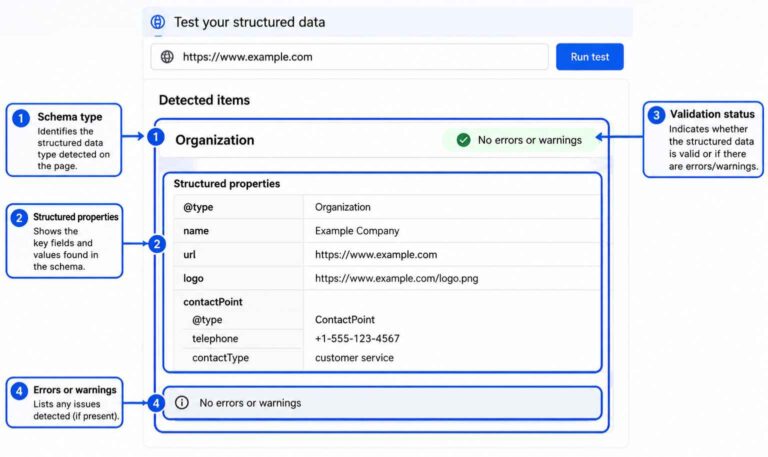
Structured data does not magically make content rank or become cited. Instead, it can provide machine-readable context that complements the information already present on the page.
For example, Article schema can identify an article’s author and publication information. BreadcrumbList schema can describe the page’s location within the site’s hierarchy.
The supplied brief states that schema markup can improve AI citation probability by more than 50%, citing Katteb research. That claim should be independently verified before publication because citation probability depends on many variables and cannot safely be attributed to schema alone.
Use Google’s Rich Results Test to validate eligible structured data. Schema.org provides the vocabulary reference. Rank Math and Yoast SEO can automate portions of schema implementation in WordPress.
What This Means For You: Add structured data where it accurately describes visible page content and where the format is appropriate.
Research Callout: Structured data can help search engines interpret content, but eligibility for rich results does not guarantee that Google will display a rich result.
GEO Definition:
Schema markup is structured, machine-readable information that describes entities and content on a webpage using standardized vocabularies.
GEO Summary Snippet:
Structured data helps search systems interpret specific information about a page. It works best when it accurately reflects visible content and complements strong page structure.
Bottom Line:
Use schema to clarify meaning, not to manufacture relevance.
Factor 11: Semantic SEO and Entity Optimization
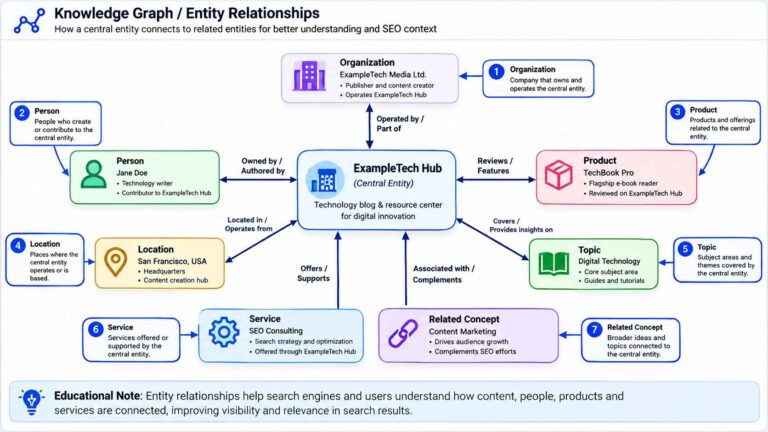
Semantic SEO connects words to concepts, while entity optimization gives search engines clearer information about the real-world people, places, organizations, products, and concepts discussed on a page.
An entity is a distinct thing that can be identified independently. “Google,” “Dhaka,” “WordPress,” “Eiffel Tower,” and “Core Web Vitals” are examples of entities.
The difference matters because search engines do not need to treat every query as a string of letters. They can interpret relationships between concepts.
For example, a page about “Apple” needs contextual information to distinguish the technology company from the fruit. A page discussing iPhones, macOS, Tim Cook, Apple Stores, and Cupertino creates a very different semantic context.
What is semantic on-page SEO and how does it work?
Semantic SEO works by covering the concepts and relationships necessary to understand a subject instead of repeating one phrase. Entity optimization strengthens that approach by explicitly and accurately connecting the page to identifiable entities.
How does Google understand page content?
Google uses many signals, including text, links, structured data, page structure, language understanding, and information from across the web. No single signal gives a complete representation of meaning.
A topical map helps you plan this structure. Suppose a website targets “technical SEO.” Its topical map might include crawling, indexing, rendering, canonicalization, redirects, sitemaps, robots.txt, JavaScript SEO, structured data, and log analysis.
The goal is not to mention every possible term. The goal is to build useful semantic connections.
The supplied research brief emphasizes entity mapping and semantic similarity as increasingly important in AI-driven search. That is directionally useful, but exact ranking mechanisms remain proprietary and should not be presented as a confirmed formula.
This is also where terms such as LLM SEO and AI-friendly content become practical. Large language models, or LLMs, process relationships between concepts and language patterns. Content becomes more machine-readable when definitions are clear, entities are correctly named, and relationships are explained.
What This Means For You: Stop asking only whether you used the keyword. Ask whether your page makes the subject unmistakable.
Research Callout: Semantic search and entity understanding are established parts of modern information retrieval, but no public source provides a complete list of Google’s internal entity-ranking signals.
GEO Definition :
Entity optimization improves how clearly a webpage identifies and contextualizes real-world concepts, organizations, people, places, products, and relationships.
GEO Summary Snippet:
Semantic and entity optimization help search systems interpret meaning beyond exact keyword matches. Strong pages explain important concepts and relationships in a contextually accurate way.
Bottom Line:
The strongest semantic content makes the topic understandable without relying on repetition.
Factor 12: AEO and GEO On-Page Optimization
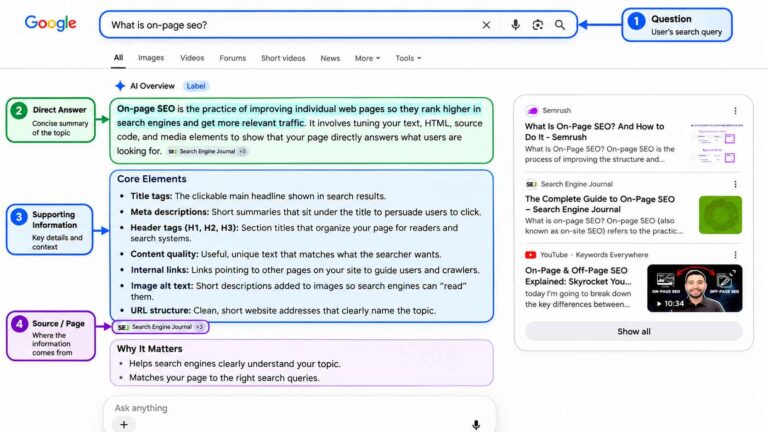
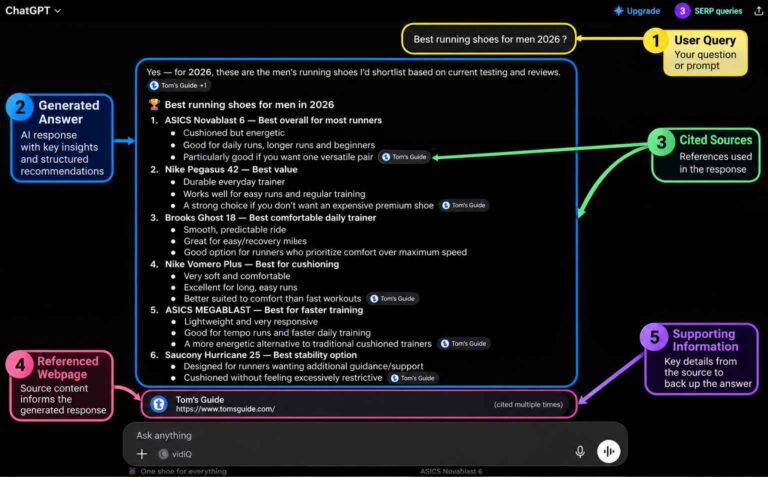
AEO (Answer Engine Optimization) focuses on making content easy for answer engines to extract and use, while GEO (Generative Engine Optimization) focuses on improving a brand or page’s visibility within generative AI responses.
The difference is subtle but useful. AEO emphasizes direct answers and question satisfaction. GEO considers the broader process through which generative systems select, summarize, compare, and cite sources.
How do I optimize content for AI search?
Start by making answers obvious. Put the direct answer close to the question, use descriptive headings, support claims with evidence, define specialist terms, and organize complex topics into logical sections.
Five practical AEO changes:
- Answer the question immediately. Put a concise answer in the first one or two sentences after a question-based heading.
- Use descriptive headings. Make each heading accurately describe the information underneath.
- Create self-contained passages. A passage should still make sense if extracted from the larger article.
- Define important terms. Give clear definitions before expanding into advanced explanations.
- Support important claims. Cite reliable sources where accuracy or evidence matters.
How does on-page SEO connect to GEO and AEO rankings?
The connection comes from shared fundamentals: relevance, clarity, structure, entities, evidence, and useful answers.
Five GEO-focused changes:
- Build entity context. Identify the organizations, products, people, locations, and concepts central to your topic.
- Demonstrate experience. Add original observations, examples, processes, screenshots, or first-hand lessons where appropriate.
- Strengthen authority. Cite reliable sources and connect the page to a credible author or organization.
- Write for multiple related questions. Cover the natural subtopics that surround the main intent.
- Make claims verifiable. Avoid unsupported statistics, vague superlatives, and statements that cannot be checked.
The supplied brief describes GEO as roughly 80% strategic and 20% technical, based on Writer.com research. That ratio is best treated as a strategic heuristic rather than a measurable industry law.
It also cites Ahrefs research suggesting AI Overviews can reduce click-through rates for top-ranking pages by up to 58%. The implication is more important than the exact number: if AI answers satisfy users before they click, earning visibility inside those answers becomes increasingly valuable.
What This Means For You: Don’t create a separate “AI version” of your article. Improve the underlying content so it is clear, trustworthy, structured, and useful enough for multiple search interfaces.
Research Callout: AI search behavior changes quickly. Validate current platform-specific statistics before publishing claims about citation rates, traffic losses, or AI Overview behavior.
In Simple Terms: Make your content easy to understand, easy to extract, and worth trusting.
AEO Definition:
Answer Engine Optimization is the practice of structuring and improving content so answer-focused search systems can identify concise, useful responses to user questions.
GEO Definition:
Generative Engine Optimization is the practice of improving content, authority, entity context, and information structure so generative search systems can accurately represent or cite a source.
GEO Summary Snippet:
AEO prioritizes clear answers and extractable passages, while GEO considers visibility within AI-generated responses. Both depend on strong relevance, structure, evidence, and semantic clarity.
Bottom Line:
AI search does not eliminate traditional optimization; it rewards pages that communicate their value more clearly.
Common On-Page SEO Mistakes to Avoid
Even strong SEO teams can overcomplicate page optimization. The most common mistakes are usually less glamorous than a new algorithm update and much easier to fix.
Mistake 1: Optimizing for a keyword instead of an intent
A keyword is a clue about what someone wants, not the complete task. Before editing a page, identify whether the searcher wants an explanation, comparison, tutorial, product decision, local service, or another outcome.
Mistake 2: Treating word count as a ranking target
Longer content is not automatically better. Add depth when it helps the reader make a decision or understand the subject. Remove sections that repeat the same idea simply to make the article look substantial.
Mistake 3: Writing introductions that delay the answer
Readers and answer engines benefit from early clarity. State the main answer first, then provide context, examples, qualifications, and evidence.
Mistake 4: Adding schema that does not match visible content
Structured data should describe what is genuinely present on the page. Marking up information that visitors cannot see can create eligibility and quality problems rather than an SEO shortcut.
Mistake 5: Overusing exact-match keywords
Natural language is usually stronger than repetitive phrasing. Use the primary term where it clarifies the subject and cover related concepts where they genuinely help satisfy the query.
Mistake 6: Ignoring internal competition
If several pages target essentially the same intent, review whether they should be consolidated, differentiated, or repositioned. More URLs do not automatically create more visibility.
Mistake 7: Chasing tool scores instead of outcomes
A plugin score is a diagnostic aid, not a search ranking. Prioritize improvements that make the page more relevant, useful, accessible, trustworthy, and technically sound.
Bottom Line: The best audit is not the one with the most green checkmarks. It is the one that removes the biggest obstacles between the searcher and the answer.
Complete On-Page SEO Audit Checklist
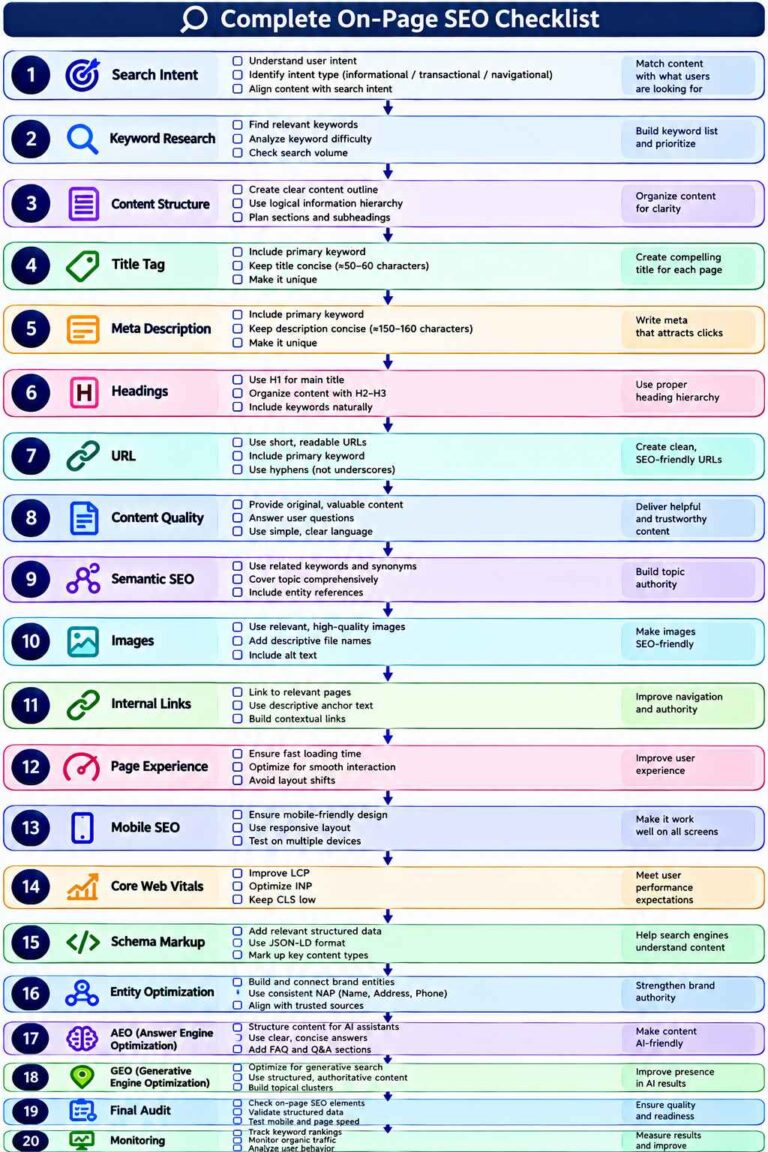
An SEO audit should identify problems that prevent a page from satisfying intent, being discovered, being understood, or providing a good user experience.
A practical audit starts with Google Search Console. Check impressions, clicks, queries, average position, indexing status, and Core Web Vitals.
For deeper technical inspection, Ahrefs Webmaster Tools can help identify crawl issues and broken links. Screaming Frog can crawl up to 500 URLs in its free version, making it useful for smaller websites.
SEOptimer can provide page-level reports. Rank Math and Yoast SEO can provide WordPress users with real-time optimization checks. Google PageSpeed Insights evaluates performance, while Google’s Rich Results Test checks supported structured-data eligibility.
What is the best free on-page SEO checker tool?
There is no single best tool for every job. Google Search Console is the most important free source for understanding how Google already sees your site, while PageSpeed Insights and Rich Results Test solve specific technical questions.
Use the following sequence:
- Open Google Search Console and check the page’s queries, clicks, impressions, and indexing status.
- Compare current performance with the previous period.
- Identify queries where impressions remain strong but clicks or positions have fallen.
- Check the page’s title, H1, intent match, content depth, internal links, images, and structured data.
- Test performance using PageSpeed Insights.
- Validate structured data with the Rich Results Test.
- Crawl the website with Screaming Frog if you need to identify larger structural issues.
For “on page SEO audit lost keywords,” start with Search Console. Export historical query data, compare periods, identify queries that disappeared or declined, then inspect the corresponding pages before changing anything.
What This Means For You: Diagnose before editing. A ranking decline can come from intent changes, competition, indexing problems, content decay, technical errors, or SERP changes.
GEO Summary Snippet: A useful SEO audit combines search-performance data, page content review, crawling, performance testing, and structured-data validation. Free tools can identify many important problems without requiring an expensive software subscription.
Bottom Line: Use data to find the problem before you decide on the solution.
Real On-Page SEO Examples — Before and After
The easiest way to understand page optimization is to watch a weak page become useful.
Which is an example of on-page SEO?
Changing the title, H1, meta description, content structure, internal links, and page copy of an existing webpage is a direct example.
Example 1: The Lazy Kitchen
Before title: Easy Dinner Recipes
After title: 15 Easy One-Pan Dinner Recipes for Busy Nights
Before meta description: Find easy dinner recipes on our food blog.
After meta description: Need dinner fast? Try 15 easy one-pan recipes with simple ingredients, short prep times, and practical cooking tips.
Before H1: Dinner Recipes
After H1: Easy One-Pan Dinner Recipes
The revised page immediately clarifies the problem it solves. Instead of presenting a broad category, it targets a defined intent.
Example 2: Dhaka Dental Clinic
Imagine a local page titled “Dental Services.”
That title is generic. A stronger page might use:
Title: Dentist in Dhaka | General & Family Dental Care
H1: Dental Care for Families in Dhaka
The opening paragraph can explain the clinic’s actual services, location, appointment process, and patient types. Local relevance should be factual, not manufactured.
Example 3: GearUp Store
A weak ecommerce product page might repeat “best trail running shoes” fifteen times.
A better page explains intended use, terrain, fit, materials, weight, cushioning, durability, sizing, shipping information, returns, and frequently asked questions.
That is semantic optimization because the page covers the actual decision-making process.
What This Means For You: The goal is not to make a page “look SEO-friendly.” The goal is to make the page more useful and clearer for the person behind the query.
GEO Summary Snippet:
Effective page optimization improves the search result, heading structure, introduction, topical coverage, and user experience together. Strong examples solve the searcher’s actual problem rather than simply increasing keyword repetition.
Bottom Line:
The best optimization often looks like better writing, better organization, and better information.
On-Page SEO Tools — Free and Paid Options for Every Budget
Tools do not replace judgment. They help you find problems faster.
Google Search Console is essential for performance data because it shows the queries and pages already appearing in Google. Ahrefs and SEMrush provide broader competitive and keyword research capabilities, while Screaming Frog specializes in crawling.
For WordPress, Yoast SEO and Rank Math provide optimization workflows directly inside the editor. Surfer SEO and NeuronWriter focus heavily on content optimization. SEOptimer provides page-level audit reporting.
| Tool | Free Plan | Best Feature | Best For | Difficulty Level |
| Google Search Console | Yes | Search performance | Every website | Beginner |
| Yoast SEO | Yes | WordPress optimization | Bloggers | Beginner |
| Rank Math | Yes | WordPress SEO features | WordPress users | Beginner |
| Ahrefs Webmaster Tools | Yes | Site auditing | Website owners | Intermediate |
| SEMrush | Limited | SEO research suite | Professionals | Intermediate |
| SEOptimer | Limited | Page audits | Small sites | Beginner |
| Screaming Frog | Yes, up to 500 URLs | Crawling | Technical audits | Intermediate |
| Surfer SEO | Limited/trial options vary | Content optimization | Content teams | Intermediate |
| NeuronWriter | Plan-dependent | Content guidance | Writers | Intermediate |
| PageSpeed Insights | Yes | Performance testing | Every website | Beginner |
What is the best free on-page SEO checker tool?
For most beginners, Google Search Console is the best starting point because it provides actual performance information from Google rather than a generic score.
What This Means For You: Don’t collect ten SEO tools and use none of them properly. Pick one performance tool, one crawler, and one content workflow that fits your site.
GEO Summary Snippet:
SEO tools accelerate diagnosis, research, crawling, content optimization, and performance testing. The most useful tool depends on the specific problem you need to solve.
Bottom Line:
Use tools to support decisions, not to outsource your SEO judgment.
Indexability Checks Before You Publish
A polished page cannot earn organic visibility if search engines cannot index it. Before publishing, confirm that the page is not unintentionally blocked by a noindex directive, that the canonical URL points to the intended version, that important content is available to crawlers, and that internal links lead to the preferred URL.
Check the page in Google Search Console after publication and use URL Inspection to verify the indexing status. Also confirm that robots.txt is not blocking resources or URLs that search engines need to access. Indexability is not the same thing as ranking, but it is a prerequisite for organic visibility.
Practical rule: First make the page crawlable and indexable; then optimize relevance, usefulness, and presentation.
How to Do On-Page SEO in 2026 — Complete Step-by-Step Checklist
Bookmark this — it’s your complete on-page SEO checklist for 2026.
- Write a clear title. Put the main topic near the beginning when natural and communicate a specific benefit or outcome. → Factor 1.
- Add a useful meta description. Explain what the page provides and give the searcher a reason to click. → Factor 2.
- Structure the headings. Use one clear H1, logical H2 sections, and H3 subsections where needed. → Factor 3.
- Map the topic. Identify the main query, related questions, entities, and concepts the page needs to cover. → Factor 4.
- Improve the content. Match search intent, add firsthand experience, support important claims, and remove unnecessary filler. → Factor 5.
- Clean the URL. Use a short, descriptive, stable path that reflects the page topic. → Factor 6.
- Compress every important image. Resize files, use modern formats, create useful filenames, and write descriptive alt text. → Factor 7.
- Link related pages. Add contextual internal links to important supporting and parent pages. → Factor 8.
- Check performance. Test mobile usability and Core Web Vitals with PageSpeed Insights and Search Console. → Factor 9.
- Add accurate structured data. Use appropriate schema types and validate them before publishing. → Factor 10.
- Strengthen entities. Clearly identify important people, organizations, products, places, concepts, and their relationships. → Factor 11.
- Optimize for answers. Put direct answers under useful questions, create self-contained passages, and support claims with credible evidence. → Factor 12.
The purpose of this process is not to make every page score 100 in a plugin. The purpose is to make every important page clearer, more useful, more accessible, and easier to interpret.
What This Means For You: Work through the checklist from top to bottom on your five most valuable pages first.
Frequently Asked Questions
What is on-page SEO?
On-page SEO is the practice of improving an individual webpage’s content, structure, and controllable elements so search engines and users can understand and use it. It includes titles, headings, content, URLs, images, internal links, structured data, search intent, and page experience.
Why is on-page SEO important in 2026?
On-page SEO matters because search engines and AI-driven interfaces still need clear, useful, trustworthy information to understand a webpage. Strong structure, direct answers, semantic relevance, evidence, and good page experience can support visibility across traditional results and generative search experiences.
How does on-page SEO work?
On-page SEO works by aligning a page with the searcher’s intent and making its topic, structure, evidence, and relationships clear. Titles, headings, copy, links, images, URLs, structured data, and performance each contribute different signals. No single element guarantees rankings.
What are the most important on-page SEO factors?
Important factors include search intent, title tags, headings, content quality, semantic coverage, URLs, images, internal links, performance, structured data, entities, and answer-focused formatting. Prioritize the factors that improve relevance, usefulness, accessibility, and understanding for the specific page.
How do I optimize content for AI search?
Use direct answers, descriptive question-based headings, self-contained passages, clear definitions, accurate entity context, credible evidence, and useful examples. Make important claims verifiable and avoid unsupported statistics. The goal is not to create a separate AI version of the article; it is to make the original page clearer and more trustworthy.
Conclusion
On-page SEO in 2026 is still one of the strongest levers available to a website owner because you control most of the work directly.
The first lesson from the 12 factors is simple: clarity beats repetition. Your title, headings, URL, content, images, and internal links should tell one coherent story.
The second lesson is that quality now includes context. Search intent, E-E-A-T, semantic relationships, entities, evidence, and topical coverage all help a page demonstrate that it genuinely solves a problem.
The third lesson is that search visibility has expanded. Your content may appear as a traditional result, a featured answer, an AI Overview source, or a citation inside a generative response. That means structure and extractability matter alongside rankings.
Start with Factor 1 today. Open your five most important pages. Check the title tag, H1, and meta description on each one. Fix those first, then work down the checklist. Small, consistent improvements compound into meaningful ranking gains over time.
If you want the next practical step, continue with your [on-page SEO checklist PDF] or [link to: technical SEO guide]. You can also explore the related [link to: keyword research guide], [link to: off-page SEO guide], [link to: Google Search Console setup], and [link to: schema markup tutorial].